
Comprehensive Roof Inspection Checklist for McKinney TX Homes — roof insurance claims north dallas tx
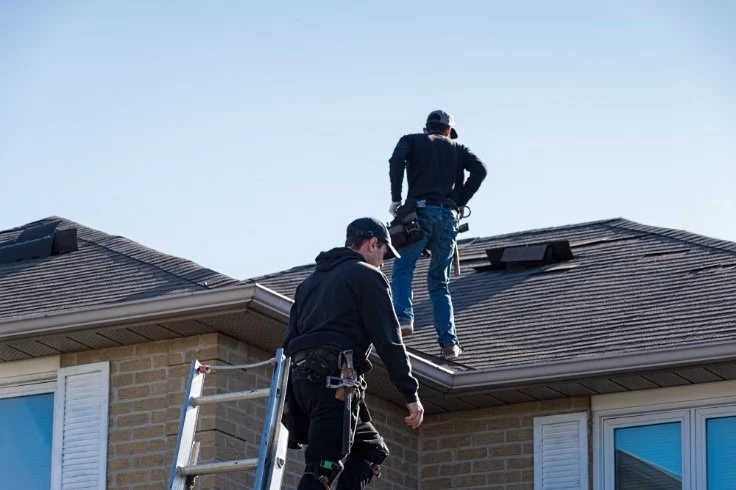
North Texas weather keeps your roof on its toes. Between spring hail, summer heat, and surprise wind events, McKinney homeowners can’t afford to guess about roof condition—especially when an insurance claim might be on the line. This guide gives you a practical, step-by-step roof inspection checklist tailored to McKinney, Allen, Frisco, and greater North Dallas homes.
If you need a professional opinion or help navigating a claim, Fireman’s Roofing & General Contractor LLC is a trusted local resource with decades of Texas storm experience. Use the checklist below to spot issues early, document damage correctly, and decide what to handle yourself vs. what to bring in a pro for.
Start with a quick scan from the ground and an attic peek, then move through each section. If you see anything questionable, pause and document before touching it. Careful documentation can make a real difference for roof insurance claims north dallas tx.
Why Roof Inspections Matter After Hail or Wind
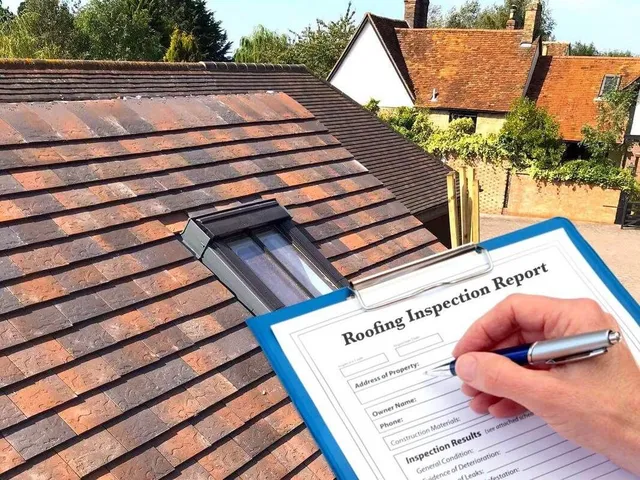
- Hidden damage is common: Hail bruises shingles and may not leak immediately. Wind can lift shingles just enough to break seals and invite water later.
- Early detection saves money: Sealing lifted shingles, re-caulking flashing, or replacing a few damaged vents costs far less than repairing soaked insulation and drywall.
- Claim deadlines: Most Texas policies require prompt reporting. Inspections soon after storms protect your timeline.
- Resale value: Roof condition is a top buyer concern in North Dallas; clean documentation supports your home’s value.
Local trend notes
- Trend: Peak hail risk in Collin County is typically March–June, with late-season pop-up storms in September–October.
- Trend: Consecutive hail seasons can age a roof faster than the shingle’s rated life due to cumulative impacts.
Quick Reference Table: What to Check
| Component | What to Look For | Why It Matters | North Dallas Tip |
|---|---|---|---|
| Shingles | Missing, torn, curled edges, hail bruises (soft spots), granule loss | Compromised shingles invite leaks and shorten roof life | Look for granules piling in gutters/downspouts after storms |
| Flashing (valleys, walls, chimneys) | Gaps, cracked caulk, rust, lifted edges | Flashing handles heavy runoff; failures are common leak sources | Check south/west-facing walls for sun-baked sealant cracks |
| Underlayment | Exposed or torn underlayment if shingles are missing | Protects decking; exposure accelerates wood damage | Wind-driven rain exploits any exposed overlaps |
| Vents & Penetrations | Cracked boots, loose caps, dented box vents | Penetrations are leak-prone if seals fail | Hail dents on metal vents are a hail-storm indicator |
| Gutters & Downspouts | Dents, loose hangers, clogs, sagging | Poor drainage leads to fascia rot and foundation issues | After hail, check for pings/dings to validate storm impact |
Signs of Wear and Damage You Can’t Ignore
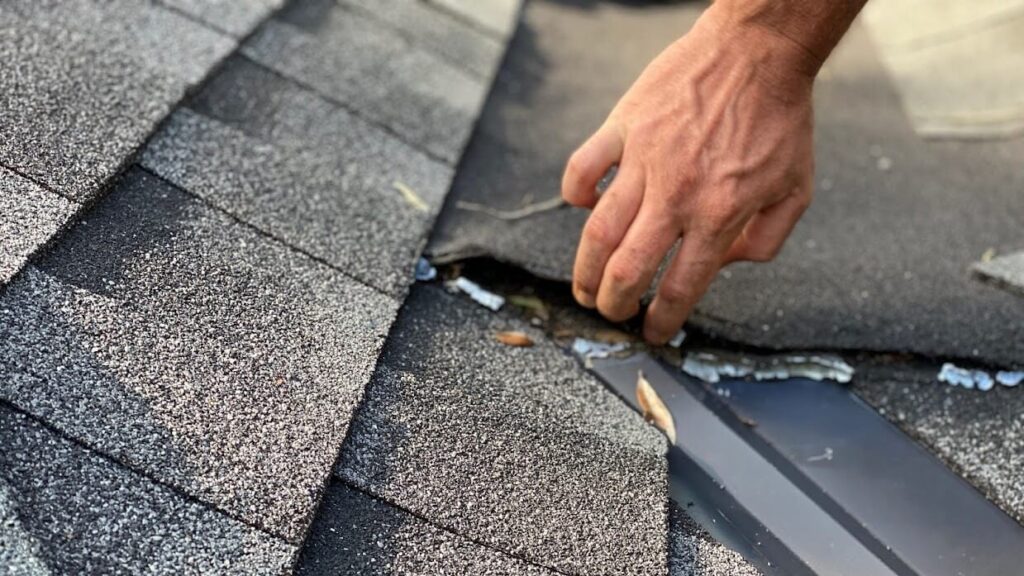
- Granule loss: Bald spots or heavy granules in gutters indicate UV exposure and hail impact wear.
- Soft decking: A spongy feel underfoot signals rot or moisture trapped under shingles.
- Nail pops: Nails pushing up create holes that can leak with wind-driven rain.
- Staining/Algae: Black streaks are largely cosmetic; brown/orange rust stains near flashing could indicate metal failure.
- Blistering vs. bruising: Blisters are heat-related and pop from the inside; hail bruises feel soft with intact surface granules displaced.
- Interior clues: Attic dampness, musty odors, water stains on ceilings, or peeling paint signal hidden leaks.
Storm Damage vs. Age-Related Wear: What’s the Difference?
Storm Indicators
- Random, circular hail marks; soft bruises that give under thumb pressure
- Metal dings: HVAC fins, gutters, downspouts, and soft metal vents pitted or dented
- Wind creases: Sharp lines where shingles bent and broke the mat
- Shingle displacement: Missing tabs or new shingle scuffing exposing asphalt mat
Age-Related Indicators
- Generalized granule loss: Uniform across slopes, more on sunny sides
- Thermal cracking: Straight-line cracks due to heat cycles, not random impacts
- Curling and brittleness: Shingles crack when lifted lightly
- Long-term moss/lichen growth and brittle flashing sealants
Key takeaway: Storm damage is typically random and abrupt; age-related wear is gradual and more uniform. Correct classification can be crucial for roof insurance claims north dallas tx.
DIY vs. Pro: What You Should Inspect Yourself vs. Hire Out
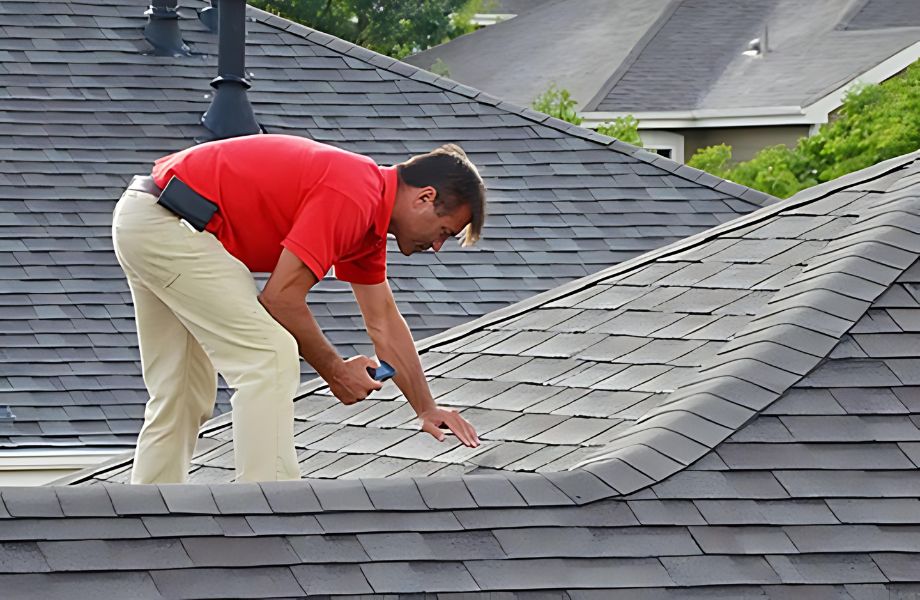
Safe DIY Checks
- Ground scan with binoculars: Look for missing shingles, lifted corners, debris piles.
- Attic inspection: Check after rain for damp spots, light penetration, and insulation wetness.
- Gutter check: Look for granule buildup and dents; ensure water flows freely.
- Perimeter photos: Soffit/fascia rot, downspout attachments, and siding near roofline.
Pro-Only Tasks
- On-roof hail assessment: Feeling for bruises and checking shingle mat fractures.
- Flashing probing: Testing sealant and hidden overlaps around chimneys/sidewalls.
- Moisture mapping: Using meters and thermal cameras to trace leak pathways.
- Steep-slope walking and two-story inspections: Safety harnesses and proper footwear required.
Safety first: If you’re unsure, stay off the roof. Documentation from the ground is still useful to your claim and to your roofing contractor.
When to Inspect in North Texas
- After any hail or wind event: Inspect within 24–72 hours while evidence is fresh.
- Seasonal checks: Early spring (pre-storm season) and late fall (post-storm/leaf drop).
- Before real estate transactions: A pre-listing roof inspection prevents surprises.
- Before major interior remodels: Protect new finishes by ensuring the roof/attic is dry.
Curious about timing for larger projects? See the best time to get a new roof in Dallas TX to plan around weather windows, materials, and crew availability.
The Inspector’s Toolkit: What Pros Use and Why
- Chalk and gloves: To mark and feel hail bruises safely.
- Moisture meter: Finds damp decking and wet drywall/insulation.
- Thermal camera: Highlights heat anomalies indicating hidden moisture.
- Pitch gauge and harness: Safe access on steep slopes.
- Magnet sweeper: Picks up nails after repairs or storms.
- Drone (where appropriate): Captures steep or inaccessible areas; provides claim-friendly images.
Pros also document with a consistent photo system: overall slope photos, close-ups with scale (coin or ruler), and directional shots (N/E/S/W) to show sun/wind exposure.
What Photos and Documents You Need for Insurance
- Date-stamped photos: Wide shots of each slope, close-ups of damage, and yard-level hail indicators (dented mailbox, AC fins, gutters).
- Interior evidence: Ceiling stains, attic wet spots, and any damaged contents.
- Weather context: Keep your personal notes of storm date/time and conditions you observed. (Your roofer can add local storm reports when needed.)
- Maintenance records: Prior repairs, roof age, and warranties.
- Contractor inspection report: Itemized findings, roof measurements, and recommended scope.
Readiness for roof insurance claims north dallas tx
Claim readiness starts with clean documentation and clear differentiation between storm damage and wear. If you think you have a claim, contact a qualified roofer before you file to avoid guesswork. A pro can pre-document, estimate scope, and help you position your roof insurance claims north dallas tx for a smoother process.
Step-by-Step Claim Readiness
- Immediate photos: Roof, gutters, and soft metals to prove hail/wind impact.
- Attic check after rain: Confirm active leaks or wet insulation.
- Pro inspection: Written report with supporting photos.
- File the claim: Reference the storm date and type of damage.
- Adjuster meeting: Have your roofer present to compare findings and discuss scope.
- Approve scope & schedule: Get materials and color selections ready; track code items.
Experienced roofers help homeowners avoid common pitfalls in roof insurance claims north dallas tx and make sure legitimate storm-related repairs are properly included.
Want a deeper dive into the claims process? Read how roofing insurance works in Texas for a step-by-step walkthrough.
Common Mistakes Homeowners Make During Claims
- Waiting too long: Missing notice deadlines or allowing additional damage to occur can complicate claims.
- Starting repairs before documentation: Always photograph and get a professional inspection first.
- Assuming all damage is covered: Age-related wear or prior issues may not be covered under your policy.
- Not having a roofer present with the adjuster: You want a qualified advocate to discuss technical details.
- Throwing away damaged materials: Keep samples (like torn shingles) when safely possible until after inspection.
Understanding Your Policy: Replacement Cost vs. Actual Cash Value
- Replacement Cost Value (RCV): Pays the cost to replace with like kind and quality, minus your deductible. Usually paid in two checks—depreciation is released after work is completed.
- Actual Cash Value (ACV): Pays the depreciated value up-front; you may be responsible for the depreciation gap, plus deductible.
Code upgrades: Some policies include Ordinance & Law coverage for code-required upgrades (like drip edge or improved ventilation). Ask your agent and roofer to clarify what’s included.
Working with an Adjuster and Roofer
- Pre-meeting: Share your roofer’s report with the adjuster so everyone sees the same issues.
- On-site: Your roofer can point out hail bruises, wind creases, and damaged flashing, and provide slope-by-slope measurements.
- Scope agreement: Ensure the final insurance scope includes all related items—underlayment, flashing, vents, gutters, and code items.
- Supplementing: If hidden damage is found (rotten decking, additional flashing), your roofer can submit supplements with documentation.
When a Full Replacement Makes Sense vs. Patch Repair
Patch Repair
- Isolated area damage (a few shingles, minor flashing issues)
- No widespread hail bruising or wind creasing
- Roof is relatively new and matches are available
Full Replacement
- Widespread hail bruising or multiple slopes affected
- Wind creases or missing tabs across several areas
- Shingles are brittle/aged and repairs won’t bond well
- Manufacturer match issues (color/texture discontinued)
Considering timing and logistics? Review the best time to get a new roof in Dallas TX to align with weather patterns and scheduling.
Permits, Documentation, and Warranties
- Permits: Many North Dallas cities require roof permits. Your contractor should pull these and close them out.
- Photos: Before, during (decking, underlayment, flashing), and after shots support the claim and warranty.
- Manufacturer warranty: Verify the shingle warranty terms and required accessories (starter, hip/ridge, underlayment, ventilation) for enhanced coverage.
- Workmanship warranty: Ask for a written labor warranty with term length and what’s covered.
- Final invoice and certificate: Your insurer may need completion confirmation to release depreciation.
Sample Damage Photos: What Adjusters Expect to See
Use these prompts to capture clear evidence:
- Photo 1: North slope—3’x3’ area showing 6–8 hail marks chalked for scale (include a coin or ruler).
- Photo 2: Close-up of hail bruise—granule displacement with soft spot under light pressure.
- Photo 3: Wind crease—horizontal line across shingle with lifted edge.
- Photo 4: Dented soft metal—downspout or cap vent with visible pings.
- Photo 5: Flashing gap—chimney sidewall with cracked sealant and daylight visible.
- Photo 6: Attic—wet decking or stained truss near vent penetration.
- Photo 7: Gutter granules—handful of loose granules at downspout outlet after storm.
Inspection Checklist Summary
| Area | DIY Checks | Pro-Only Checks | Photo to Take |
|---|---|---|---|
| Roof Slopes | Missing/curled shingles, debris piles | Hail bruises, wind creases, brittle mat | Wide slope + close-up with scale |
| Flashing & Valleys | Cracked caulk, rust, gaps | Overlap integrity, fastener locations | Close-up of gaps and rust |
| Vents & Boots | Cracked boots, loose caps | Seal integrity under flanges | Boot cracks and dented vents |
| Gutters/Downspouts | Dents, clogs, sagging | Hidden fascia damage | Dent close-ups and granules |
| Attic | Wet spots, light leaks | Moisture mapping/thermal | Damp decking and insulation |
| Interior Ceilings | Stains, peeling paint | Leak source tracing | Room-wide + stain close-up |
FAQ: North Dallas Homeowner Questions
1) How soon after a storm should I inspect?
Within 24–72 hours. Take photos while debris and granules are still present, then schedule a professional inspection.
2) Do I have a claim if my roof isn’t leaking?
Possibly. Hail bruises and wind creases can shorten roof life even without immediate leaks. Document and consult a roofer before filing.
3) Will my premiums go up if I file?
Storm claims are often considered “no-fault,” but policies vary. Ask your agent. The bigger cost is ignoring damage that grows into interior repairs.
4) Can I repair only the damaged area?
Sometimes, yes. But if damage is widespread or shingles are discontinued/brittle, a full replacement may be the better long-term value.
5) What if the adjuster misses damage?
Your roofer can provide a supplemental report with photos and measurements. A re-inspection can be requested.
6) How do I prepare for the adjuster visit?
Organize your photos, storm date, and inspection report. Have your roofer present to walk the roof and discuss scope.
7) Are code upgrades covered?
Only if your policy includes Ordinance & Law coverage. Ask your agent and have your roofer identify required code items in your city.
Conclusion
Regular inspections protect your home, your budget, and your peace of mind. After North Texas hail or wind, a structured approach—document, verify, and decide—keeps you ahead of leaks and claim deadlines. If you’re ready for a professional inspection, claim support, or a fair estimate for repairs or replacement in McKinney and the North Dallas area, schedule with Fireman’s Roofing & General Contractor LLC today.
