What Actually Happens When You File a Roof Insurance Claim in North Dallas?
The situations described here are composites drawn from the types of jobs and decisions we encounter regularly. Names and specific figures are illustrative.
The call came in on a Tuesday in mid-June, a couple of days after the line of storms that ran from Prosper down through Allen and dropped golf-ball hail on a stretch of subdivisions east of US-75. The homeowner had a four-year-old roof on a two-story in McKinney, an HOA reminder about exterior upkeep, and a voicemail from a door-knocker who had already promised her a free roof. What she really wanted was someone to tell her whether she should even file. That moment, the one between the storm and the phone call to the carrier, is where most of these jobs get decided, and it is the reason an insurance claim roofing contractor in North Dallas ends up being more about paperwork and pacing than about shingles.
The morning after the storm, before anyone calls the carrier
By the time we pulled up, three other trucks were already on the block, two retail roofers and one out-of-state crew with magnetic door signs. None of that means a claim is the right move. It just means a lot of people are betting it is.
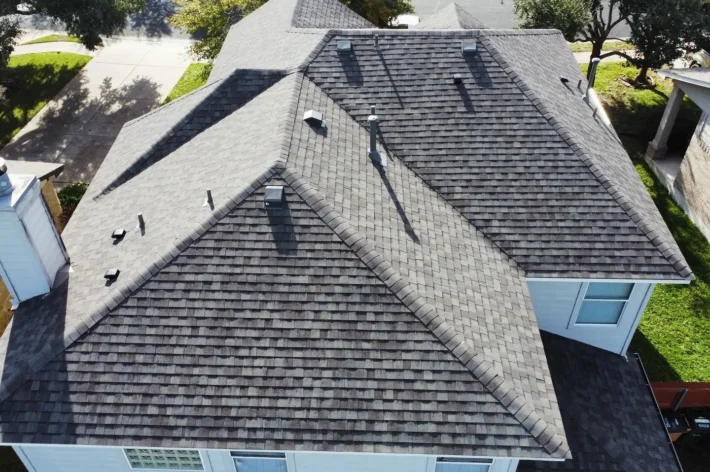
The first thing we did was climb the roof and look. Not for a sales pitch, just to see whether the hail had bruised the mat or only knocked granules off the high spots near the ridge. There were impact marks on the soft metals, the vent caps were dented in a pattern an adjuster will recognize on sight, and the south slope had real shingle damage. So we told her: yes, this is worth a claim. But before you call the carrier, pull the policy and find three numbers.
The three numbers nobody reads until they need them
The first number is the deductible. Texas policies have moved hard toward percentage deductibles on wind and hail, usually one or two percent of dwelling coverage. On a house insured for $450,000, a two-percent wind/hail deductible is $9,000 out of pocket before the carrier pays a dollar.
The second number is the coverage type, RCV or ACV. Replacement cost value pays what it costs to put the roof back today, minus the deductible, in two checks. Actual cash value pays the depreciated value of what is up there now. A twenty-year-old roof on an ACV policy is sometimes worth less than the deductible.
The third number is the policy’s reporting window and any cosmetic-damage exclusion on metal. Most Texas carriers now want hail claims filed within a year of the date of loss. Our breakdown of the roof insurance claim deadline after a Texas hailstorm walks through what happens when the window starts closing.
The call to the carrier, and what to say less of
The mistakes we hear are usually on the open-ended questions. “How bad is the damage?” “I don’t know, the roofer said it’s totaled.” That one sentence can flip a claim from a regular field inspection to a desk review by a senior examiner. Better answer: there is visible hail impact on the shingles and soft metals, and you would like a field adjuster scheduled. Short, factual, no adjective.
The carrier assigned a claim number and gave her a window. That is the part where the storm-chaser crews try to get a contract signed before the adjuster shows up. We do not do that. She did not need to sign anything until she had a number she could compare to a real scope.
The day the adjuster climbs the ladder
A roofer who has worked claims in Collin County knows what an adjuster from a catastrophe team is going to mark and what they are going to skip. The chalk patterns on the south slope, the bruising on the rake edge, the way the metal valleys look — those are the spots that get measured.
On the McKinney house, the field adjuster flagged the south, east, and west slopes for full replacement and put the north slope on the “will monitor” list. That is a partial approval. In Texas, matching coverage is not automatic. Some policies have it, some do not. If it is not in the declarations, you can end up with a roof that has three new slopes and one twelve-year-old slope.
The scope sheet came back at $18,400 with depreciation withheld. The deductible was $9,000. The first check was about $4,200, which is replacement cost minus depreciation minus deductible. The depreciation comes back as a second check once the work is signed off, assuming the policy is RCV.
Where the supplement work lives
Most homeowners think the adjuster’s scope is the final number. It almost never is. The carrier’s estimate is built off Xactimate line items priced at regional averages. It is usually missing drip edge on rakes, ice and water shield in valleys per current Texas residential code, decking replacement that only shows up once the old roof is off, and code-upgrade allowances for permitting and disposal.
On the McKinney roof we found four sheets of rotted decking under the south slope once tear-off started. That was an $800 supplement. The new drip edge and starter strip pushed it another $600. The supplement process is not adversarial when it is documented. We send photos, the manufacturer’s installation requirements, and the relevant municipal code reference. The homeowner does not pay a second deductible.
What homeowners ask at the kitchen table
The first question is whether filing a claim will raise their premium. The honest answer: a single weather-related claim in Texas usually does not move the premium directly, because hail is a non-fault event.
The second is what happens if the claim gets denied. You have the right to a re-inspection and, after that, to engage a licensed public adjuster or pursue appraisal under the policy. Most denials we see get reversed at re-inspection with better documentation.
The third is how to tell the storm-chasers apart from the local crews. A Texas-based contractor will be willing to come back next year. A roofer with an out-of-state plate and no McKinney address is usually gone by Labor Day. The longer version is in our walkthrough of why filing a roof insurance claim in North Dallas TX is sometimes worth waiting on.
How the McKinney job ended
The full scope on her roof, after supplements, came in around $22,600. The deductible stayed at $9,000. The carrier paid the rest, in two checks, across about six weeks. The roof went on in a single day. The matching-shingle endorsement on her policy meant the north slope got replaced too.
She had two choices on material. We talked through both — a standard architectural shingle, or a Class 4 impact-resistant shingle that triggered a small annual premium discount. She went with the impact-resistant product. Our notes on the hail damage insurance claim timeline in Texas lay out roughly the same arc in week-by-week order.
What this looks like for someone else’s roof
The pattern that holds across all claims is that the claim is decided in the documentation, not in the conversation. The roofer who shows up with photos, code citations, and a written scope gets paid for the work that needs doing. The one who shows up with a slogan does not.
For homeowners weighing whether to repair or replace once the scope is settled, our roof repair and roof replacement pages walk through the trade-offs. If you want the work done by an insurance claim roofing contractor in North Dallas who will still be answering the phone next March, the path is the same: read the policy, schedule the inspection, document the loss, and let the paperwork do the heavy lifting.
If you’d like a professional take on this for your own house, our residential roofing in North Texas page walks through the process.
More on Storm Damage at Fireman’s Roofing