
Roof Maintenance North Dallas: Inspections & Repairs

Introduction
Spring storms in North Texas hit hard and fast. Hail, high wind, and sudden downpours test every roof in McKinney, Frisco, Allen, and the greater North Dallas area. A structured plan protects your home, lowers repair costs, and extends roof life.
Use a clear checklist for inspections and repairs. Partner with a proven local contractor when damage appears. Fireman’s Roofing & General Contractor LLC serves North Dallas homeowners with practical solutions that fit local codes and weather patterns.
Why roof maintenance is important in North Dallas

Spring brings the most volatile weather in North Texas. Strong cold fronts collide with warm, humid air. Hail and wind arrive with little warning. Your roof absorbs the impact. Routine maintenance in March through June prevents small problems from growing.
Local weather factors that stress roofs
- Large hail: Quarter to golf ball size hail can bruise shingles and dent metal.
- Wind gusts: 40 to 70 mph gusts can lift shingles and expose fasteners.
- Heavy rain: Fast rainfall tests flashing, sealants, and gutters.
- Rapid temperature swings: Expansion and contraction loosen sealants and nails.
- Tree debris: Live oak leaves and twigs clog gutters and scuppers.
Seasonal risk pattern
North Dallas sees the highest hail and severe wind risk in April, May, and June. Plan inspections after each major storm and at least once at the end of spring.
| Month | Relative hail risk (1-10) | Relative wind risk (1-10) |
|---|---|---|
| March | 5 | 6 |
| April | 8 | 8 |
| May | 9 | 8 |
| June | 7 | 7 |
Use this pattern to schedule roof maintenance north dallas before and after peak events.
What a proper post-storm roof inspection includes
Work from the ground first. Use binoculars. Only climb if you have the right footwear, a stable ladder, and a spotter. Safety comes first.
Exterior checklist
- Perimeter scan: Look for missing shingles, lifted edges, and loose ridge caps.
- Hail hits: Check slopes facing the storm for dark circular bruises or granule loss.
- Flashing: Inspect step flashing, wall transitions, and chimney flashing for bends or gaps.
- Pipe boots and vents: Look for cracks, dry rot, or displaced vent covers.
- Gutters and downspouts: Check for dents, sagging, and heavy granule runoff.
- Soffit and fascia: Identify cracks, rot, or displaced sections from wind.
- Skylights and solar mounts: Look for cracked lenses, loose gaskets, and shifted brackets.
Interior checklist
- Attic inspection: Look for daylight through the deck, wet insulation, or water stains.
- Ceilings and walls: Identify new water spots, peeling paint, and bulges.
- HVAC and vents: Confirm vent pipes are sealed at the roof deck.
Documentation steps
- Record storm date and time.
- Take wide shots and close-ups of every slope and affected feature.
- Save photos with labels by location and slope.
- Collect any fallen shingle fragments and note the brand and color if known.
Schedule professional evaluation if you find any roof penetration damage, displaced flashing, or signs of active leaks. This is the core of roof maintenance north dallas.
Signs of storm damage to look for after spring weather
- Shingle bruising: Soft spots that feel spongy. Granules often missing.
- Cracked shingles: Straight or spider cracks from hail impact.
- Lifted shingles: Raised tabs or creased shingles from wind.
- Metal dents: Dings in gutters, downspouts, and vents indicate hail size and direction.
- Loose ridge caps: Broken adhesive lines or shifted caps along the ridge.
- Leaking at flashings: Stains around chimneys, skylights, or wall transitions.
- Blocked gutters: Heavy granule loads indicate accelerated shingle wear.
- Attic moisture: Damp decking, mold odor, or rust on nails.
Typical spring roof issues in Texas
Hail impacts
Hail knocks off granules, exposes asphalt mats, and speeds UV breakdown. Larger hail can fracture fiberglass mats and shorten shingle life by years.
Wind uplift
Wind breaks adhesive bonds and lifts tabs. Repeated gusts fold shingles and crease them. Creased shingles often fail early and must be replaced.
Leaks at penetrations
Rubber pipe boots crack. Storm vibration loosens sealants around skylights and chimney saddles. Water finds these weak points first.
Gutter and drainage issues
Debris clogs downspouts. Overflow backs up under shingles at the eave. Soffit and fascia swell and rot when water stays trapped.
Tree and debris damage
Branches scrape granules and puncture shingles. Cones and nuts act as mini hail.
What repairs are common after North Texas spring storms
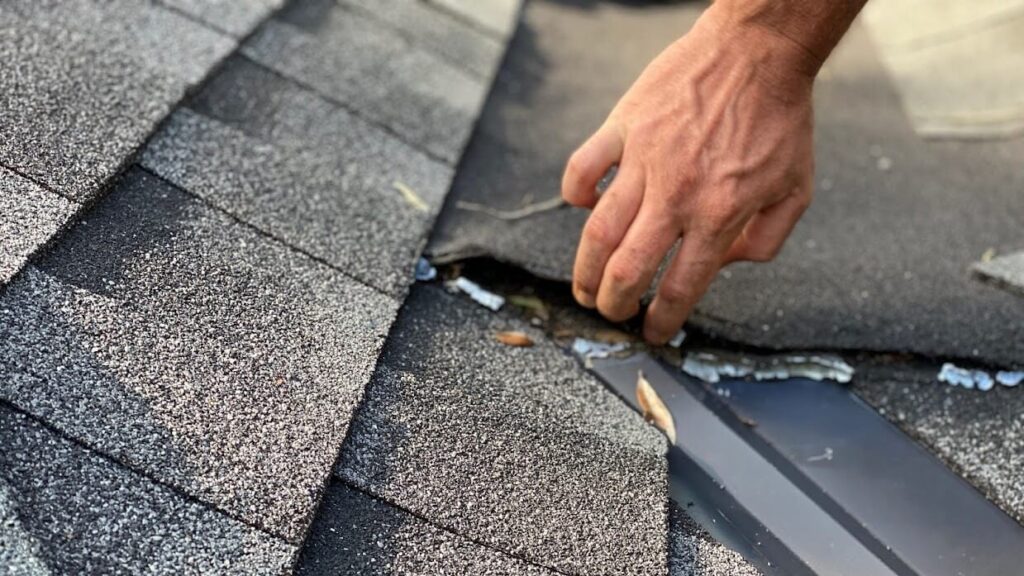
- Shingle swaps: Replace isolated damaged shingles and repair underlayment.
- Ridge cap replacement: Remove cracked caps and install new caps with upgraded adhesive.
- Flashing resets: Re-seat step and counter flashing at walls and chimneys.
- Pipe boot upgrades: Replace cracked boots with silicone or lifetime boots.
- Skylight reseal: Replace gaskets and resecure fasteners.
- Gutter rehanging: Correct slope, replace crushed sections, and add larger outlets.
- Deck patching: Replace damaged OSB or plywood sections.
- Full slope replacement: Replace a full slope when hail or wind damage is widespread.
Focused repairs can stop leaks fast. Consider targeted upgrades like impact rated shingles or improved ventilation during repairs.
Should you inspect the roof yourself or call a professional
DIY inspection makes sense when
- You only need a ground level scan and attic check.
- You have a safe ladder setup and non slip shoes.
- You have basic knowledge of shingles, flashing, and vents.
Call a professional when
- You see active leaks, ceiling damage, or wet insulation.
- You suspect hail bruising or creased shingles across multiple slopes.
- You notice bent or open flashing, loose ridge caps, or soft decking.
- Your roof is steep, tall, or covered in tile or metal.
Professional inspections include moisture readings, fastener checks, and written reports. This documentation supports insurance claims and helps plan roof maintenance north dallas.
How to prepare for roofing work in spring

- Clear driveways and access points. Move vehicles into the garage or down the street.
- Protect attic items with plastic sheeting if deck repairs are possible.
- Secure pets. Noise can stress animals during tear off and nailing.
- Mark sprinkler heads and garden features for crew awareness.
- Confirm material color, profile, and ventilation plan with your contractor.
- Review start time, daily cleanup, and debris container placement.
Budgeting and timelines for spring roof repairs
Costs vary by size, pitch, material, and extent of damage. Use these ranges as planning guides in North Dallas. Your contractor will give a site specific quote.
| Work scope | Typical timeline | Typical cost range | Notes |
|---|---|---|---|
| Minor shingle repair, a few tabs | 2 to 4 hours | $250 to $650 | Includes sealant and limited underlayment patches |
| Pipe boot replacement | 1 to 2 hours | $150 to $400 | Upgrade to silicone or lifetime boots |
| Flashing reset at wall or chimney | 1 day | $400 to $1,200 | May need new counter flashing |
| Gutter repair or section swap | 2 to 6 hours | $200 to $900 | Consider larger outlets |
| Partial slope replacement | 1 to 2 days | $1,500 to $6,000 | Dependent on slope size and material |
| Full roof replacement, asphalt | 1 to 3 days | $8,000 to $20,000+ | Depends on size, ventilation, and accessories |
| Full roof replacement, metal | 2 to 5 days | $18,000 to $45,000+ | Higher wind and hail resilience |
Ask for a detailed scope. The scope should include underlayment type, ventilation upgrades, flashing plan, and permit needs.
Permits and local rules
Some cities require permits for re roofs, decking replacement, or structural changes. Review this guide on McKinney roof permits and service requirements to avoid delays.
How spring maintenance supports roof longevity
- Prevents water intrusion: Early crack and flashing repairs stop deck rot.
- Protects granules: Timely patching reduces UV damage.
- Keeps ventilation balanced: Attic airflow prevents heat and moisture buildup.
- Extends service life: Routine care can add 3 to 5 years to asphalt shingle roofs.
- Lowers lifecycle cost: Small annual repairs cost less than emergency fixes and interior restoration.
This is the value of consistent roof maintenance north dallas programs across changing spring weather.
Common roofing materials and how spring affects each
Asphalt shingles
- Risk: Hail bruising, wind creasing, granule loss.
- Care: Replace damaged tabs, reseal lifted edges, check ridge caps.
- Upgrade: Class 3 or Class 4 impact rated shingles reduce hail damage.
Steel and aluminum metal roofs
- Risk: Cosmetic dents from hail, fastener back out on exposed fastener systems.
- Care: Tighten or replace fasteners, inspect seams and sealants, confirm underlayment integrity.
- Upgrade: Hidden fastener standing seam handles wind and thermal movement well.
Tile roofs
- Risk: Cracked tiles from impact or foot traffic.
- Care: Replace broken tiles, verify underlayment condition, seal penetrations.
- Note: Use walk pads and trained crews to avoid breakage.
Wood shake
- Risk: Splitting from hail and drying after heavy rain.
- Care: Replace split shakes, apply preservatives, clear debris to limit moisture retention.
Flat or low slope roofs
- Risk: Punctures, seam failure, ponding water.
- Care: Patch punctures, reseal seams, clear drains and scuppers.
Minor repairs vs major replacements
Use this table to decide when targeted repair can work and when a replacement serves better.
| Condition | Minor repair suitable | Major replacement recommended |
|---|---|---|
| Hail damage | Scattered bruises on less than 10 percent of shingles | Widespread bruising or fractures across multiple slopes |
| Wind damage | Isolated lifted tabs with intact adhesive after reseal | Creased shingles or repeated uplift along ridges and eaves |
| Leaks | Single penetration leak with sound decking | Multiple leak points or deck rot |
| Age | Under 10 years with good granule coverage | Approaching end of warranty or severe granule loss |
| Energy and ventilation | Minor baffle or vent additions | Ventilation overhaul needed for heat and moisture control |
Trend snapshot: spring storm activity and planning
Plan your maintenance cadence around expected spring risk. The pattern below reflects typical relative risk levels for North Dallas based on multi-year severe weather tendencies.
| Month | Relative storm frequency (1-10) | Recommended action |
|---|---|---|
| March | 6 | Pre season inspection and gutter cleaning |
| April | 8 | Post storm checks after each hail or wind event |
| May | 9 | Professional inspection if any damage indicators appear |
| June | 7 | End of spring tune up and reseal |
Use this schedule along with regular attic checks to avoid surprises. If you plan to upgrade to metal for summer efficiency, review this resource on summer roof protection and steel roof installation.
Insurance considerations during spring repairs
- Document quickly: Photograph damage as soon as it is safe.
- Preserve evidence: Do not discard damaged materials until after adjuster review.
- Prevent further damage: Tarp active leaks. Insurers expect reasonable mitigation.
- Scope alignment: Ensure contractor scope matches adjuster scope and local code.
- Code upgrades: North Dallas cities may require ventilation or underlayment upgrades during replacement.
Ventilation and moisture control in spring
Rain and humidity stress attics. Proper ventilation keeps deck and insulation dry.
- Intake vents: Keep soffit vents open and free of insulation blockages.
- Exhaust vents: Ridge vents or box vents must match intake volume.
- Bath and dryer vents: Vent to the exterior. Do not vent into the attic.
- Air sealing: Seal can lights and penetrations to reduce humid air leakage.
Gutters and drainage checklist
- Clean gutters before and after major storms.
- Confirm at least one downspout per 30 to 40 feet of gutter.
- Add splash blocks or drain extensions to move water 3 to 6 feet from the foundation.
- Consider larger 3×4 inch downspouts for heavy spring rain.
- Install gutter guards if trees hang over the roof.
Attic and interior moisture checks
- Look for rust on roofing nails. Rust suggests chronic humidity.
- Probe damp decking with a moisture meter if available.
- Check for mold odor near bathroom ceilings and around chimneys.
- Run bathroom exhaust fans during and after showers for 20 minutes.
Proactive upgrades that pay off in spring
- Impact rated shingles: Reduce hail damage and may lower premiums.
- Synthetic underlayment: Better tear resistance during wind events.
- Ice and water shield: Add along eaves, valleys, and around penetrations.
- Lifetime pipe boots: Silicone or metal boots resist UV and cracking.
- Enhanced ridge caps: Stronger caps resist wind uplift.
- Oversized gutters: Improve drainage during heavy rain.
These upgrades work well as part of planned roof maintenance north dallas or during replacement.
How to choose a spring roofing contractor
- Local track record with North Dallas weather and codes.
- Detailed written scope with materials and ventilation plan.
- Clear timeline and daily cleanup commitments.
- Proof of insurance and any needed registrations.
- References from nearby neighborhoods.
Home preparation checklist for an efficient jobsite
- Park vehicles away from the house during working hours.
- Cover outdoor furniture and grills.
- Remove wall hangings that might shift from hammering.
- Mark fishponds and delicate landscaping.
- Communicate any access limits and start times.
Post-repair quality checks
- Verify shingle pattern alignment and straight lines.
- Check all flashings are tight and sealed.
- Confirm vent and boot installations match the contract.
- Walk the yard with the crew for magnet sweep and debris removal.
- Collect all warranties and final invoices for your records.
Seasonal maintenance calendar for North Dallas roofs
- Late winter: Pre spring inspection, clean gutters, trim branches.
- Early spring: Inspect after the first major storm.
- Peak spring: Inspect after hail or high wind. Address issues within 48 to 72 hours.
- Early summer: Perform end of spring tune up and confirm ventilation.
- Fall: Post storm check and gutter cleaning before leaf drop.
Expert FAQ
How soon should I inspect after a storm
Inspect as soon as it is safe. Address active leaks the same day. Schedule a professional inspection within 24 to 72 hours if you find damage.
Do small hail hits matter
Yes. Small bruises can shed granules and expose asphalt. That speeds aging and leads to leaks over time.
Can I spot hail damage from the ground
You can spot missing shingles and metal dents from the ground. You often need a close inspection to confirm shingle bruising.
When does repair turn into replacement
When damage affects multiple slopes, when shingles crease, or when leaks involve deck rot. The table above helps you decide.
What is the best shingle for hail
Class 4 impact rated shingles perform well in North Texas. Verify your roof ventilation and underlayment during installation.
Do I need a permit for a re roof
Many cities in Collin County require a permit for roof replacement. Read this guide to McKinney roof permits and plan ahead.
How can I keep my home cooler after spring repairs
Choose reflective shingles or consider a steel system. Learn more in our overview of summer roof protection and steel roof installation.
Checklist: your spring roof maintenance action plan
- Document storm dates and weather.
- Perform ground level and attic inspections.
- Photograph all damage and note locations.
- Call a local professional for a full inspection when you see any leak or widespread damage.
- Approve a clear written scope with materials and ventilation.
- Schedule work during a dry forecast window.
- Complete a final walkthrough and collect warranties.
Use this list to keep roof maintenance north dallas on track every year.
Conclusion
Spring maintenance protects your home from North Texas storms. Quick inspections, fast repairs, and smart upgrades prevent leaks and extend roof life. Plan your calendar around the local storm pattern, document every issue, and fix problems before summer heat sets in.
For a thorough inspection, a clear plan, and work that meets local codes, schedule a visit with Fireman’s Roofing & General Contractor LLC. Get your roof ready for the season and avoid costly surprises.
