What Should a Stress-Free Roof Replacement in North Dallas, TX Look Like?
The situations described here are composites drawn from the types of jobs and decisions we encounter regularly. Names and specific figures are illustrative.
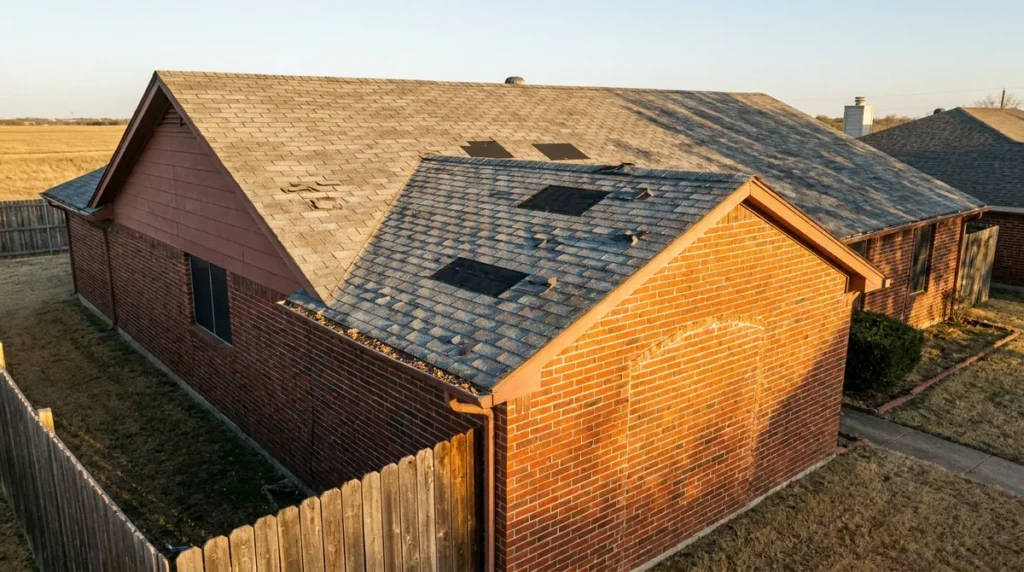
The first week of September is when the phone starts ringing differently. In May it is people who just got hit. In September it is people who got hit in May, watched the neighborhood fill up with out-of-state trucks, waited them out, and are now ready to talk about a roof replacement in North Dallas, TX on their own terms. The homeowner in this story lived off Bethany Drive in Allen, east of US-75, in a house built in 2006 with the original three-tab shingles still on it. A spring storm cell had dropped quarter-sized hail across his street. He had photos. He had three bids. What he did not have was anyone telling him what actually needed to happen from start to finish.
That is the gap almost every homeowner in Collin County is standing in when they call. The decision to replace is usually already made. The decision that matters is how.
Why he waited, and why that was the right call
Texas led the country in hail events again in 2025, with 902 reported by the Storm Prediction Center, and the Dallas-Fort Worth area sits in the busiest part of that map. The May 2024 storms alone caused more than $2.3 billion in property damage across north and east Texas. When that kind of weather comes through, the crews that follow it are not local, and the bids they hand out on the driveway are built for speed, not for the house. Our post on what out-of-state plates on an Allen hail roofer usually mean covers that pattern in detail.
This homeowner’s roof was not leaking. It was bruised, it was nineteen years old, and the sealant strips had let go years ago. He had time. So he used it. He called us in late August, we walked the roof the next morning, and by the time we sat down at his kitchen table he understood something the storm crews had not told him: waiting until fall meant the permit office was not backed up, the shingle color he wanted was actually in stock, and the crew on his roof would be the same crew that quoted it. A roof replacement scheduled in September or early October in this part of Texas costs the same as one done in a panic in May. The experience is not the same.
What the three bids had in common
He laid the three estimates out on the table. One was from a door-knocker, one from a regional outfit out of Plano, one from a company that had done his neighbor’s roof after the same storm. All three were priced in the same band for an architectural shingle. All three said “full tear-off.” None of them said what happened after the tear-off. Not one line about decking. Not one line about ventilation. Not one line about the permit.
Two of them also had a problem he had not noticed. One offered to “help with the deductible.” The other had a line about “insurance covers the rest.” Since September 2019, Texas Insurance Code Chapter 707 has made it a Class B misdemeanor for a contractor to pay, waive, absorb, or offset a homeowner’s insurance deductible, and the carrier can hold back the recoverable depreciation until it sees proof the deductible was actually paid. Any roofing contract over $1,000 is required to spell that out in 12-point type. Neither of those two bids did. That told him more about the company than the price did. If the insurance side of this is new to you, our guide on how roofing insurance works in Texas walks through it without the sales pitch.
Texas also has no state roofing license. The Roofing Contractors Association of Texas runs a voluntary one, and it tells consumers to verify liability insurance, a permanent business address, a written scope, and warranty terms before signing anything. Two of his three bids listed a cell phone and a P.O. box. That was the end of that conversation.
What we found when the first square came off
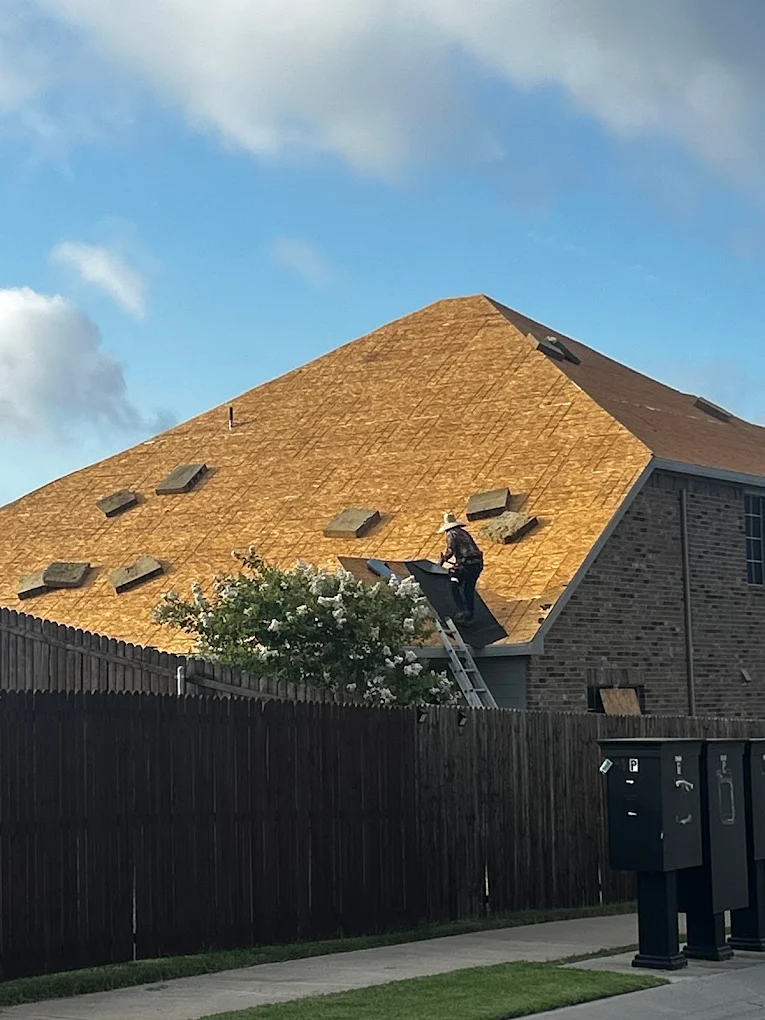
Tear-off started on a Tuesday. We worked the back slope first because that is the side that takes the afternoon sun, and we wanted the homeowner to see the decking before he saw any number for it. About forty minutes in, one of our guys called me over to a stretch above the kitchen. The OSB was darker than it should have been and had some give underfoot. Not rotted through. Compromised enough that a new shingle nailed into it would not hold its bite in a 70-mile-an-hour gust, which is exactly what this part of the metroplex gets a few times a year.
We swapped that section and two more boards near the chimney flashing. That is normal on a roof this age, and it is why we price decking by the sheet, separately, before the job starts. In the Dallas market, sheathing replacement runs roughly $2 to $7 per square foot on top of the shingle price, and a homeowner should know that number before the first shingle comes off, not after. The bids he had been holding buried it in a “contingency” line or left it out entirely. Both approaches end the same way: a phone call on day two with a number nobody agreed to.
McKinney’s roofing packet, which mirrors what most Collin County cities enforce, requires the old covering to come off completely when the roof is water-soaked or deteriorated or already has two layers. Drip edge is required on every asphalt shingle job. The permit is a flat $200 in McKinney, it is required for all roofing projects, and the final inspection checks shingles, flashing, and that every vent was reattached. Allen goes a step further and asks the contractor to sign a Final Roof Installation Affidavit attesting to a post-installation attic inspection and that every fuel-fired appliance vent is intact and venting outside under the 2021 IRC. If a bid does not mention a permit, ask who is pulling it. Our roof permit guide for McKinney and Allen covers what each city expects.
The ventilation number nobody had quoted
Once the deck was open we got to the part that decides whether a 30-year shingle lasts 12 years or 25. His soffit vents looked the part from the driveway. Up close, the screens had been painted over twice and were moving almost no air. The attic underneath had been cycling between something close to 140 degrees and whatever the AC could claw back, every afternoon, for nineteen summers. Shingle warranties assume balanced airflow. His roof never had it.
The code math is simple enough to put on a napkin. The International Residential Code requires net free ventilating area equal to 1/150 of the attic floor area, or 1/300 if 40 to 50 percent of that area is up near the ridge and the rest is at the eaves. The Asphalt Roofing Manufacturers Association goes a step further and recommends intake supply 50 to 60 percent of the total, so the roof is always pulling more air in low than it pushes out high. On his roughly 2,400-square-foot attic, that worked out to about eight square feet of net free area, most of it at the soffit. He had maybe two.
We cut in continuous intake on the south and west runs and ran a baffled ridge vent that matched the shingle. It added a few hundred dollars to a five-figure job. By the following July his attic was running measurably cooler and his AC was cycling less. That is not a marketing claim. It is what happens when the shingles stop baking from underneath. We wrote up the longer version of that argument in our attic ventilation guide for Texas homes. If a bid you are holding does not break out intake and exhaust in square feet, it is hiding the most important number on the roof.
Where the insurance math made the material decision
By Wednesday the deck was sound and the synthetic underlayment was down, so we had the real conversation about what went back on top. He had been leaning toward a standard architectural shingle because one of the driveway crews had told him impact-rated shingles were a gimmick. They are not. They are also not automatically the right answer.
Here is what I told him. The Texas Department of Insurance lets each carrier set its own discount for UL 2218 Class 1 through Class 4 roofing, with Class 4 getting the highest credit, and the number is set company by company. So the shingle is only worth the upcharge if his specific policy pays him back for it. I told him to call his agent that afternoon and get the actual percentage in writing. He came back with a 22 percent reduction on the wind-and-hail portion of his premium. With Texas homeowners premiums up 55 percent between 2019 and 2024 and the statewide average already north of $3,200 a year, that discount more than covered the Class 4 upcharge over the life of the roof. We went with the Class 4 line of Atlas Pinnacle Pristine shingles, and he kept the manufacturer’s UL 2218 label paperwork for his file. If you want to see the same decision on a different house, our story about a 16-year-old Allen roof that went to Class 4 after hail ran through the numbers a different way.
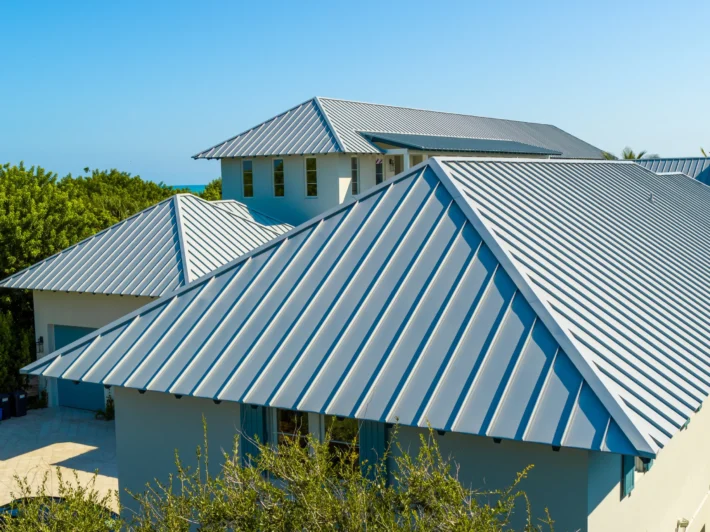
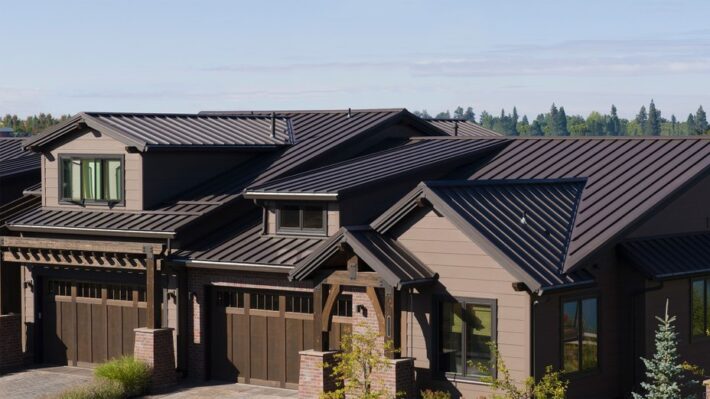
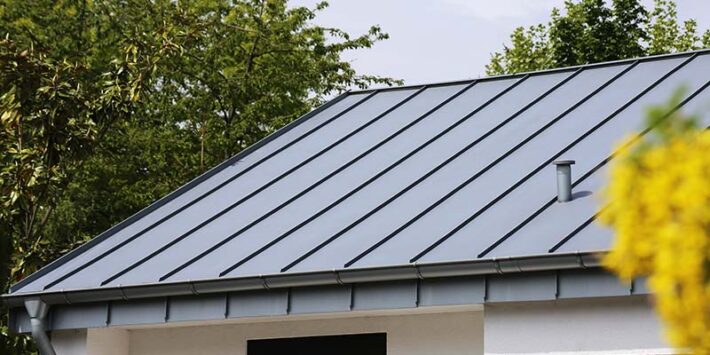
What we did not do was push him toward metal. Standing seam is the right call on certain houses: long simple runs, a homeowner staying 25-plus years, a roofline that actually shows off the panels. His was a hip-and-valley layout with three dormers. The metal quote would have run close to three times the Class 4 shingle number, for a payback that did not pencil before he planned to sell. We pointed him at our piece on summer roof protection and steel roof installation so he could see where steel does make sense, and he agreed his house was not the candidate. That is a kitchen-table conversation, not a clipboard one, and it is the kind we have on every roof replacement we scope.
What the eleven days actually looked like
Contract signed on a Thursday. Permit filed Friday. Material ordered the same day, because a September order means the color he picked is the color that shows up. The permit cleared the following Wednesday. Tear-off started the Tuesday after that, and the install ran across two and a half working days with one afternoon pause for a storm cell we had been watching on radar since breakfast. Truck off the street on day eleven.
Most residential roofs in Collin County finish in one to three days on the install side. What stretches the calendar is the permit window and material lead times during the spring rush. If a contractor promises a same-week install in May, ask whether they ordered your material before you signed, and whether the color on the truck is the one you chose. We broke the calendar down further in how long a typical roof replacement takes in McKinney.
On cost, since that is what most people want first: the current Dallas-area average for a full replacement sits around $10,000, with a typical range of roughly $6,000 to $14,200 and asphalt shingle running $3 to $11 per square foot installed. Labor is 40 to 60 percent of that. Decking, ventilation, and gutter work sit on top. His job landed in the upper third of that range because of the Class 4 material, the decking, and the intake vents. He knew every one of those numbers before the crew arrived. Our post on what a roof replacement costs in Allen goes deeper on where the money goes, and if the timing is the problem rather than the total, how roofing financing works in Allen covers the options.
What he asked at the end that everyone asks
Sitting at the table with the warranty paperwork between us, he asked the same three questions nearly every homeowner asks after a full replacement.
Should he have replaced the gutters at the same time? Probably. The new drip edge sat awkwardly against a nineteen-year-old gutter line, and we ended up rehanging two sections so it would sit clean. When gutters are past fifteen years, doing them with the roof is usually cheaper than doing them a year later, and our gutter installation crew in McKinney is the same crew, so it is one schedule instead of two.
Was he better covered now than before? Yes, in two ways. The Class 4 shingle triggered the discount, and the carrier now had documentation of a brand-new roof, which resets the depreciation schedule they use on the next claim. He also learned that his policy carried a 2 percent wind-and-hail deductible, which has become the standard across most of Texas. On his home that was several thousand dollars out of pocket on any future claim, and he had not known that number before this job.
What should he do during the next hail event? Photograph the hail on the ground next to a coin while it is still there. Note the date and time. Stay off the roof and call someone to walk it. And do not file on every storm reflexively, because Texas carriers are increasingly pricing on claim history. When a real claim is warranted, the hail damage roof repair process starts with the inspection, not the adjuster.
What I would tell a homeowner in the same spot
If your roof is past fifteen years old anywhere between Plano and Anna, the question is not whether it gets replaced. It is whether that happens on your calendar or the next storm’s. A planned job in early fall or late winter gives you crew availability, real material choice, and a permit office that is not two weeks behind. A storm-driven job in May gives you whatever is on the truck.
The other thing I would say is that price is the worst filter you can use on its own. Three bids that look identical on the bottom line are almost never identical underneath. Ask each one what they will do with the decking they find, what the intake and exhaust numbers are in square feet, who pulls the permit, and what the workmanship warranty says in actual sentences. The differences live in the parts that are about to be covered up.
If you are weighing a roof replacement in North Dallas, TX and want a second set of eyes on what you are holding, the team at Fireman’s Roofing & General Contractor offers a free roof inspection with a photo report, and our Allen roofing services page covers what we do in that part of the county.
Sources
- Insurance Information Institute — Facts + Statistics: Hail — Texas ranked first nationally with 902 hail events in 2025 (NOAA Storm Prediction Center data).
- Roofing Contractor / IBHS — Texas Remains No. 1 for Most Major Hail Events — May 2024 north and east Texas hail caused over $2.3 billion in property damage.
- NOAA National Centers for Environmental Information — Billion-Dollar Weather and Climate Disasters: Texas Summary — Texas averaged 13.6 billion-dollar severe storm events per year from 2020 to 2024.
- Texas Department of Insurance — Roofing Discounts — UL 2218 Class 1 through 4 credits are set company by company; Class 4 receives the highest credit; TDI form PC068 for TWIA.
- Texas Insurance Code Chapter 707 (HB 2102) — No Waiving of Deductibles Bill: Texas HB 2102 — deductible waiving is a Class B misdemeanor; insurers may withhold holdbacks until proof of payment; contracts over $1,000 must carry the statutory notice.
- United Policyholders — Texas Is Entering Peak Hail Season — 2 percent wind-and-hail deductibles as the Texas standard; premiums up 55 percent from 2019 to 2024; TDI 2024 statewide average premium of $3,291.
- International Residential Code — R806.2 Minimum Vent Area — 1/150 net free ventilating area, or 1/300 when 40 to 50 percent is upper ventilation.
- Asphalt Roofing Manufacturers Association — Why Ventilation Is Important — balanced systems with intake at 50 to 60 percent of total venting area; ventilation and maximum shingle service life.
- City of McKinney Building Inspections — Residential Roofing Guide — permit required for all roofing projects, $200 flat fee, 2021 IRC, tear-off and drip edge rules, final inspection scope.
- City of Allen Community Development — Final Roof Installation Affidavit — 2021 IRC compliance and post-installation attic inspection attestation.
- Roofing Contractors Association of Texas — Find a Licensed Texas Roofing Company — Texas has no state roofing license; what to verify before hiring.
- Angi — How Much Does Roof Replacement Cost in Dallas, TX? (August 2026) — average $10,054, range $5,960 to $14,203, asphalt $3 to $11 per square foot, sheathing $2 to $7 per square foot, labor 40 to 60 percent.