
What Are the Best Metal Roof Panels by Durability and Price?
Summary
- Steel and galvalume offer the strongest durability-to-price ratio for most McKinney homes
- Aluminum is worth it on low-slope roofs or near chemical exposure, not for hail resistance
- Standing seam costs more upfront but avoids long-term fastener maintenance
- Class 4 ratings and PVDF paint warranties matter more than gauge alone
- Insurance and resale gains can justify premium panels on the right houses
Introduction
We spend our days on North Texas roofs that take the brunt of hail, straight-line winds, long sun exposure, and fast temperature swings. That mix changes how different metal panels perform and what they truly cost over time. The cheapest panel on paper often isn’t the lowest-cost roof in McKinney after you factor denting, leaks from fasteners, code-driven upgrades, and paint performance in our heat.
As a roofing contractor in mckinney texas, we weigh durability and price through a local lens: hail frequency by neighborhood, HOA rules, roof slope and complexity, and the way North Texas winds hit ridge lines. Below is what we’ve seen hold up, when premium panels make sense, and a step-by-step path to match metal type to your roof and budget.
What defines metal roof panel durability in North Texas
Hail impact and denting
- Impact rating: Class 4 under UL 2218 is the current benchmark we look for. It does not mean “no dents,” but it signals resistance to puncture that could cause leaks.
- Material behavior: In our jobs around McKinney, painted steel resists puncture better than aluminum at the same thickness. Aluminum can deform more easily from 1.75–2.5 inch hail, which shows up in neighborhoods after spring cells.
- Panel profile: Tall standing seams and striations help hide minor denting visually. Flat-pan panels without striations show oil canning and hail dimples more.
Wind uplift and fastening
- Wind exposure: Along open exposures north of US-380, we see gusts push panels hard. Proper clip spacing and mechanically seamed standing seam hold best over time.
- Exposed fasteners: R-panel and corrugated systems use thousands of screws through the panel. They work, but gaskets age in heat and UV. Expect periodic re-screw and spot leak maintenance over a 20–30 year span.
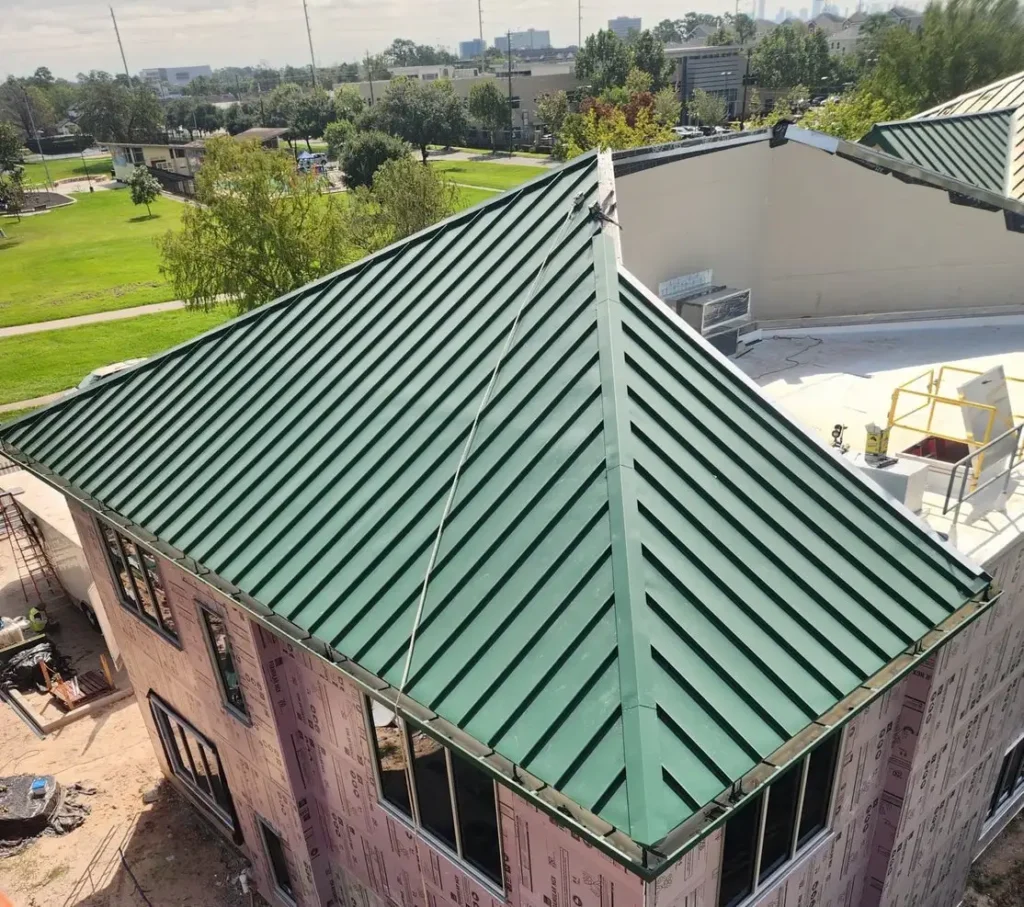
- Hidden fasteners: Standing seam moves thermally without stressing a gasket. This reduces long-term upkeep and improves wind ratings when installed to spec.
Corrosion in our region
- Runoff chemistry: Galvalume-coated steel performs well unless it sees constant contact with wet, alkaline materials (fresh concrete, mortar wash) or treated lumber without a barrier. We isolate transitions to avoid galvanic issues.
- Cut edges and field bends: Edges need touch-up and correct bend radii to avoid micro-cracking the paint, which can speed corrosion at eaves and hips.
- Condensation: Attics without balanced intake/exhaust ventilation can push interior moisture against the deck. Underlayment selection and venting matter as much as panel choice for long-term health.
Price comparisons between aluminum, steel, galvalume, copper, and zinc panels
Installed price ranges below reflect typical McKinney residential roofs in 2026 with tear-off, underlayment, trim, and code-compliant details. Complex rooflines, steep slopes, and custom flashings drive costs higher. Use these as planning brackets.
| Panel Type (common profiles) | Installed Cost (North Texas) | Typical Lifespan | Hail Dent Resistance | Maintenance | Notes |
|---|---|---|---|---|---|
| Exposed fastener painted steel (R-panel/corrugated) | $6–$10 per sq ft | 25–35 years | Moderate puncture resistance; visible dent risk | Periodic re-screw, gasket checks | Budget-friendly; more penetrations through panel |
| Galvalume steel, standing seam (painted PVDF) | $10–$16 per sq ft | 35–50+ years | Good puncture resistance; hides dents with striations | Low; hidden fasteners | Strong durability-to-price ratio locally |
| Aluminum, standing seam (painted PVDF) | $12–$18 per sq ft | 40–50+ years | Lower puncture resistance; dents more readily | Low; corrosion-proof | Best where corrosion risk or low slope is the driver |
| Zinc, standing seam | $18–$30 per sq ft | 60–80+ years | Good; softer than steel | Low; patina protects | Premium aesthetic; advanced detailing |
| Copper, standing seam | $20–$35 per sq ft | 70–100+ years | Good; softer than steel | Low; patina protects | High resale cachet; visible patina change |
Material cost is only part of the story. Underlayment, clips, ridge/valley detailing, and attic ventilation upgrades often swing bids more than panel selection on complex homes.
When is aluminum better than steel in McKinney climates
- Low-slope (1.5:12 to 2:12) standing seam where watertightness is priority. Aluminum’s corrosion resistance pairs well with high-temp underlayment and sealed seams.
- Near persistent chemical exposure: Pools with heavy chlorination outgassing or masonry wash that can drip on roofing. Aluminum tolerates corrosive environments better.
- Coastal influence is minimal here, so salt-spray benefits don’t apply to most McKinney homes. For hail-prone areas, steel typically performs better at the same thickness.
If you’re weighing these two specifically, our detailed aluminum vs steel comparison for McKinney roofs breaks down panel behavior, weight, and local cost patterns.
Common misunderstandings about metal roof pricing and longevity
- “A thicker gauge always outlasts a thinner one.” Gauge helps with dent resistance, but paint system, seam type, and installation quality matter more for lifespan and leak risk.
- “All standing seam quotes are apples-to-apples.” They are not. Clip spacing, seam height, underlayment grade, and trim packages vary widely and change performance.
- “Metal is maintenance-free.” Hidden-fastener systems need less maintenance, but sealants, valleys, and debris management still matter after storms and leaf drops.
- “Aluminum is always premium.” It’s premium for corrosion control and low slope. For hail resistance per dollar, painted steel usually wins in McKinney.
Warranties worth factoring into price comparisons
- Paint/finish (PVDF/Kynar-type): 30–35 year fade and chalk warranties are typical. Look for clear fade units (ΔE) and chalk ratings that fit our UV levels.
- Substrate: Galvalume often carries 25–40+ year limited perforation warranties when not in disallowed environments (wet concrete, animal waste, treated lumber contact). Read the exclusions.
- Workmanship: A meaningful installer warranty specifies leak coverage term and what maintenance keeps it valid. Hidden fastener roofs often pair with longer workmanship terms because there are fewer penetrations through the panel.
- Hail: Some manufacturers and insurers distinguish cosmetic vs functional damage. Understand that dents alone may not trigger replacement.
If you’re comparing steel system quotes, see our steel roof installation basics and warranties for what we check before signing a contract.
Energy efficiency and resale value: how local homebuyers view metal roofs
- Reflectivity: Light and medium finishes with PVDF coatings reduce attic heat load. We see noticeable attic temp improvements when paired with proper ventilation and radiant barriers.
- Insurance perception: Class 4 impact ratings can influence premiums, though carriers change rules. Buyers often ask about the rating, recent hail history, and deductible impacts.
- Resale in McKinney: Many buyers see standing seam as a long-life upgrade. Clean lines and modern colors help listings stand out, especially on newer builds near Craig Ranch and Trinity Falls.
When premium panel prices make sense
| Scenario | Panel we often favor | Why it pencils out |
|---|---|---|
| Low-slope modern homes (1.5:12–2:12) | Standing seam aluminum with high-temp underlayment | Corrosion resistance and sealed seams reduce leak risk over decades |
| Hail corridor north of 380, frequent spring cells | Standing seam painted steel (PVDF), striated pans | Better puncture resistance per dollar; hides minor dimples |
| High-end custom with architectural emphasis | Zinc or copper | Long service life and resale cachet justify upfront cost |
| Budget-sensitive replacements on simple gables | Exposed-fastener steel (R-panel) | Lowest upfront cost; accept planned maintenance and cosmetic tradeoffs |
A step-by-step guide: choosing metal panels the practical way
- Define roof constraints: Measure slope, count penetrations, note valleys and dead valleys. Low slope pushes you toward standing seam with better underlayment.
- Map weather exposure: Check wind fetch and hail frequency by street, not just city. If you face open fields, prioritize uplift ratings and hidden fasteners.
- Set a lifespan target: Are you planning for 15–20 years or 40–50+? Longer targets favor standing seam with PVDF finishes.
- Check HOA/ACC rules early: Confirm allowed profiles, seam heights, and color families. Disallowed profiles can waste time and design fees.
- Choose panel family: Exposed fastener for budget; standing seam for longevity and low maintenance; premium metals for design or corrosion cases.
- Pick coating and color: Prefer PVDF in our heat. If you want dark tones, verify fade warranty terms.
- Verify details in writing: Clip spacing, seam height, underlayment type, valley method, and venting plan. Ask for wind and impact ratings on the quote, not verbally.
- Compare total ownership: Add estimated maintenance (re-screw schedules for exposed fastener) and likely insurance effects. Sometimes the higher bid is cheaper at year 20.
How we advise North Texas homeowners choosing between metal options
We start with roof geometry, then exposure, then budget. After that, we weigh the two most sensitive factors in McKinney: hail denting and long-term fastener health.
| House/Exposure | Our leaning | Rationale |
|---|---|---|
| Two-story with open south face, frequent wind gusts | Standing seam steel, 1.75–2 inch seams, PVDF | Hidden fasteners reduce uplift risk and future leak points |
| Contemporary low-slope with large HVAC curbs | Aluminum standing seam with high-temp underlayment | Thermal movement and corrosion resistance around penetrations |
| One-story ranch, simple gables, budget-driven | Exposed-fastener R-panel steel | Accept maintenance plan; keep upfront costs down |
| Custom home with long hold timeline | Zinc or copper standing seam | Service life and aesthetic value offset premiums |
For many McKinney neighborhoods, painted galvalume steel standing seam offers the best balance of price, hail performance, and low upkeep. Aluminum is our go-to when corrosion or low slope forces the decision. If you want to dig deeper into the aluminum versus steel tradeoffs, our aluminum vs steel comparison for McKinney roofs covers field details we check during estimating.
Installation differences that affect durability and price
Exposed fastener systems
- Lower upfront price; faster install on simple rooflines
- More penetrations through panels; gaskets age and need re-screw cycles
- Good fit for secondary structures or budget-focused replacements
Standing seam systems
- Higher upfront cost; fewer long-term maintenance events
- Better wind uplift performance; cleaner integration with solar and snow retention
- Thermal movement managed by clips and seams instead of screws
Budget planning worksheet: align costs to goals
| Goal | Good | Better | Best |
|---|---|---|---|
| Lowest upfront cost | Exposed-fastener steel | — | — |
| Balanced cost and lifespan | — | Standing seam steel (PVDF) | — |
| Low slope/weatherproofing priority | — | Standing seam steel | Standing seam aluminum |
| Premium aesthetics and longest life | — | Zinc | Copper |
Note: The “better/best” move is not universal. If hail dent visibility is unacceptable to you, steel with striations is preferable to softer premium metals.
FAQs
Will a Class 4 metal roof stop hail damage in McKinney?
Class 4 helps prevent punctures that cause leaks. Large hail can still dent metal. Striated standing seam steel often hides minor cosmetic dents better than flat pans or softer metals.
Do PVDF paint systems really matter here?
Yes. Our heat and UV push lighter chemistries to chalk and fade faster. PVDF holds color and gloss better, especially on darker finishes. It also helps with warranty support.
How does installation differ between exposed fastener and standing seam?
Exposed fastener panels are screwed through the face of the panel. That’s quicker and cheaper but adds maintenance. Standing seam uses concealed clips and mechanical or snap seams, which cost more but reduce long-term leak points.
What HOA issues do you see in McKinney?
Architectural committees often specify seam heights, disallow exposed fastener on street-facing slopes, and restrict reflective or bright colors. Start submittals early and keep color samples on hand.
Why do I keep seeing “metal roofing contractor near me” in searches?
That phrase is a search shortcut. For decisions, focus on local experience with hail, wind exposure, and HOA approvals rather than the phrase itself.
Do metal roofs make homes hotter?
No. With PVDF cool pigments, proper underlayment, and balanced attic ventilation, we often see cooler attics versus darker asphalt shingles.
Can I install solar on a standing seam metal roof?
Yes. Clamp-based attachments avoid penetrations, which is a strong advantage of standing seam systems.
Conclusion
On most McKinney homes, painted galvalume steel standing seam delivers the best durability-to-price ratio. Exposed fastener steel is a valid budget choice if you accept scheduled maintenance. Aluminum earns its premium on low-slope or corrosive conditions. Zinc and copper are long-life, design-forward options that reward the right house and timeline. The right answer depends on slope, exposure, HOA rules, and your tolerance for maintenance and cosmetic change over time.
If you plan to compare bids, formalize specs: panel profile, seam height, underlayment, clip spacing, venting strategy, and warranty terms. Clarity up front prevents surprises later and keeps the long-term cost of your roof in line with expectations. If you want a second set of eyes, a roofing contractor in mckinney texas familiar with local hail patterns and HOA processes can help you pressure-test the options before you decide.
