
Does a Brand-New Highland Lakes Home Still Need a Roof Inspection in McKinney, TX?
The situations described here are composites drawn from the types of jobs and decisions we encounter regularly. Names and specific figures are illustrative.
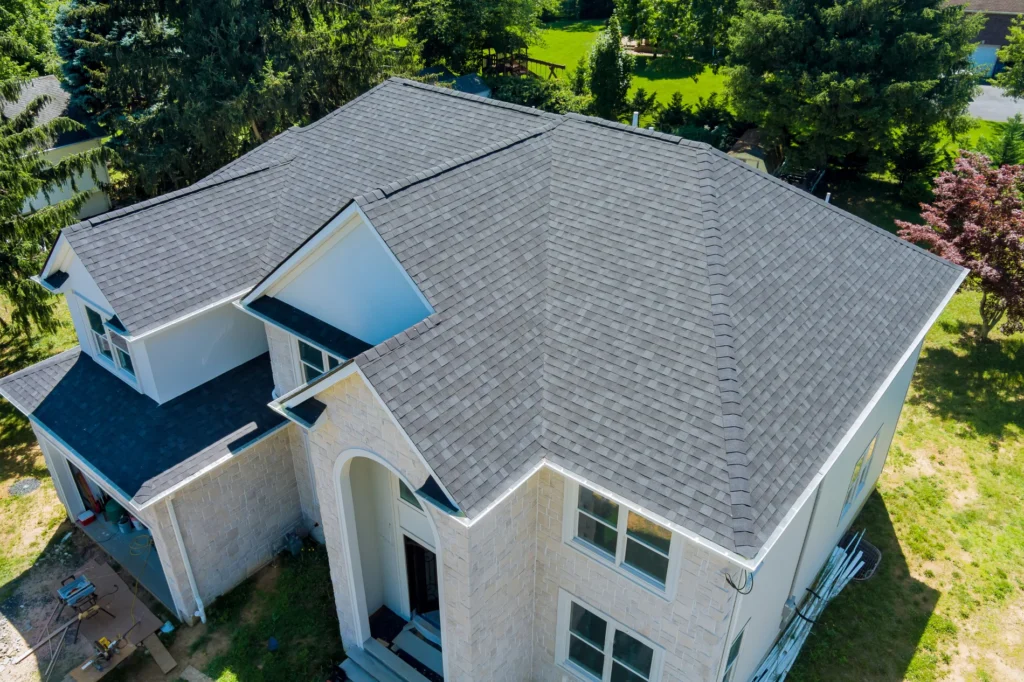
The stain showed up in the primary bedroom ceiling about nine months after move-in, in one corner under a skylight. The house was in one of McKinney’s newer communities, and a roof that young, the couple assumed, could not need a roof inspection in McKinney, TX. Then a late-summer hailstorm passed through, and the stain spread outward in a ring.
The builder’s representative looked at the roof from the driveway, called it fine, and suggested condensation. The pattern did not fit condensation, which tends to appear evenly near ducts and vents. So the couple booked an independent inspector, expecting to be told there was nothing to find.
Twenty minutes on the roof
Most of what a good inspector does happens in the first twenty minutes: walk the roof, photograph every penetration, look at each valley, and then check the attic from underneath. Nothing about the process was dramatic, which is part of the point.
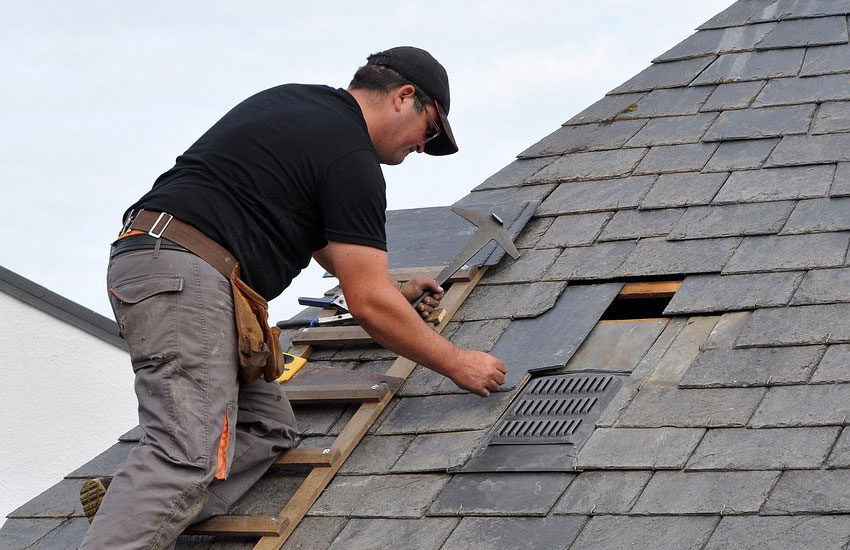
Two problems explained the stain. The flashing around the skylight had not been sealed at its upper corners, so wind-driven rain was getting behind it. And a roof valley had a single layer of underlayment where the manufacturer’s instructions called for two. Neither defect was visible from the ground, and neither would have shown up on a drive-by look.
The inspector also noted smaller things that a walkthrough tends to skip: nail placement that sat slightly high on a few courses, starter strips that were misaligned along one rake edge, and attic ventilation that was not keeping up with afternoon heat. None of these were emergencies. All of them shorten the life of a roof.
Why a roof can pass inspection and still be wrong
The roof had passed every required inspection, which surprised the couple. Inspections by the City of McKinney and Collin County verify that permits were pulled, that approved materials were used and that the installation meets the adopted International Residential Code. That is a real check. It is not a workmanship review.
A code inspection does not tell you whether a ridge vent is moving air, whether pipe boots were sealed with the right product, or whether a valley was woven the way the shingle maker specifies. Builder-grade roofing is often built to the minimum the code allows, which can mean lighter underlayment, basic flashing details and a lower-cost shingle line. That is legal and common. It also leaves little margin when the weather turns.
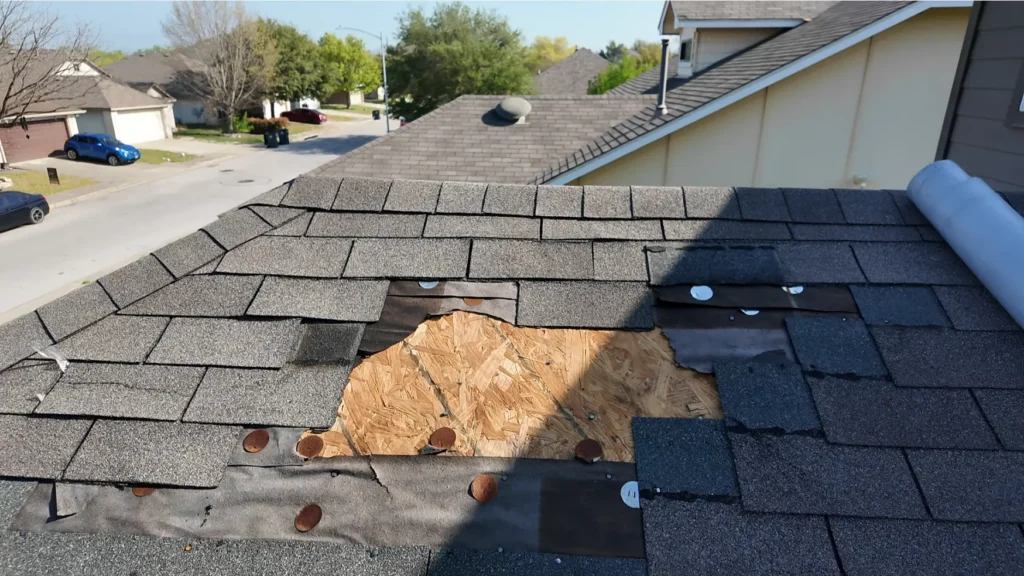
The weather here is not gentle. McKinney sits in an active North Texas hail corridor, and large hail, including baseball-sized stones, has been reported in the Frisco and McKinney area in past storms. Hail can bruise or fracture shingles on a roof that is only months old, and the damage often stays invisible until a stain appears. If the inspection shows impact marks, the conversation changes toward documentation and a claim, and a page on hail damage roof repair describes what that process typically involves.
Month nine, not month thirteen
Most builders offer a one-year warranty on the roof. It covers specific workmanship and material defects. It does not cover hail, it does not cover wear that develops as the roof cycles through Texas heat, and it generally requires a claim to be reported before the year is up.
The couple filed at month nine, with the inspector’s photographs attached. Because the defects were plainly workmanship and the paperwork was on time, the builder repaired them under warranty. If the stain had waited two more months to appear, the same repair would likely have been paid out of pocket. That gap is why inspectors suggest looking around months ten and eleven.
A typical new-build owner at this point asks whether the inspection is worth the cost. For a short visit that can document problems while they are still covered, usually yes. The repair in this story would have run into the thousands, and a ceiling and insulation replacement would have followed.
A baseline for the next hail season
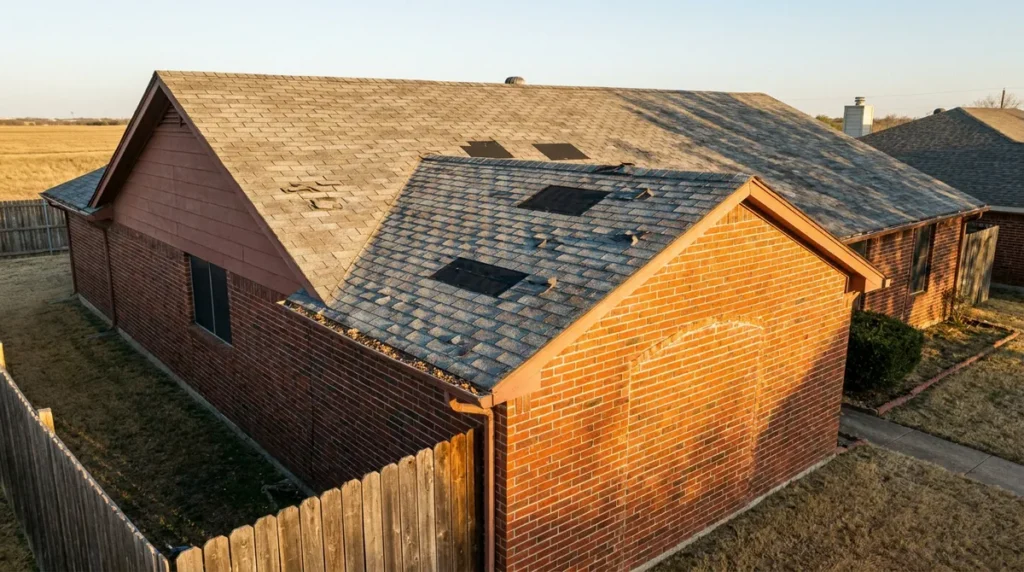
The inspection report gave the couple something else useful: a dated record of what the roof looked like before the next storm. McKinney is in the middle of a building boom. Highland Lakes is planned for 1,376 homes across 450 acres, and Huntington Park is a proposed 785-acre mixed-use development, so a lot of roofs went on quickly in the last few years. A clean report in the fall makes it easier to separate old issues from new storm damage later. A post about a September roof inspection after a long hail season shows how that comparison works in practice.
Rooflines on newer homes tend to be complicated, with valleys, dormers and skylights, and those are where flashing and underlayment mistakes hide. If your own roof is older or has already taken a hit, the same thinking applies to roof replacement planning.
What the couple took away
A roof that looks fine from the street is not the same as a roof that has been checked. For a new home in this part of Collin County, a roof inspection in McKinney, TX done before the builder warranty runs out is the least expensive time to find what a code inspection was never designed to catch.
If you’re looking for a roof inspection in McKinney, you can reach out here.
Sources
- Community Impact: New master-planned community Highland Lakes to bring nearly 1,400 homes to McKinney
- Community Impact: McKinney commission recommends zoning approval for 785-acre Billingsley development
- NOAA National Weather Service: Hail Safety and Damage Information
- NOAA National Centers for Environmental Information: Storm Events Database
- International Code Council: International Residential Code
- Texas Department of Insurance: Homeowners Insurance and Storm Claims
