
Can You Shingle Over the Old Roof to Save on Roof Replacement in Prosper, TX?
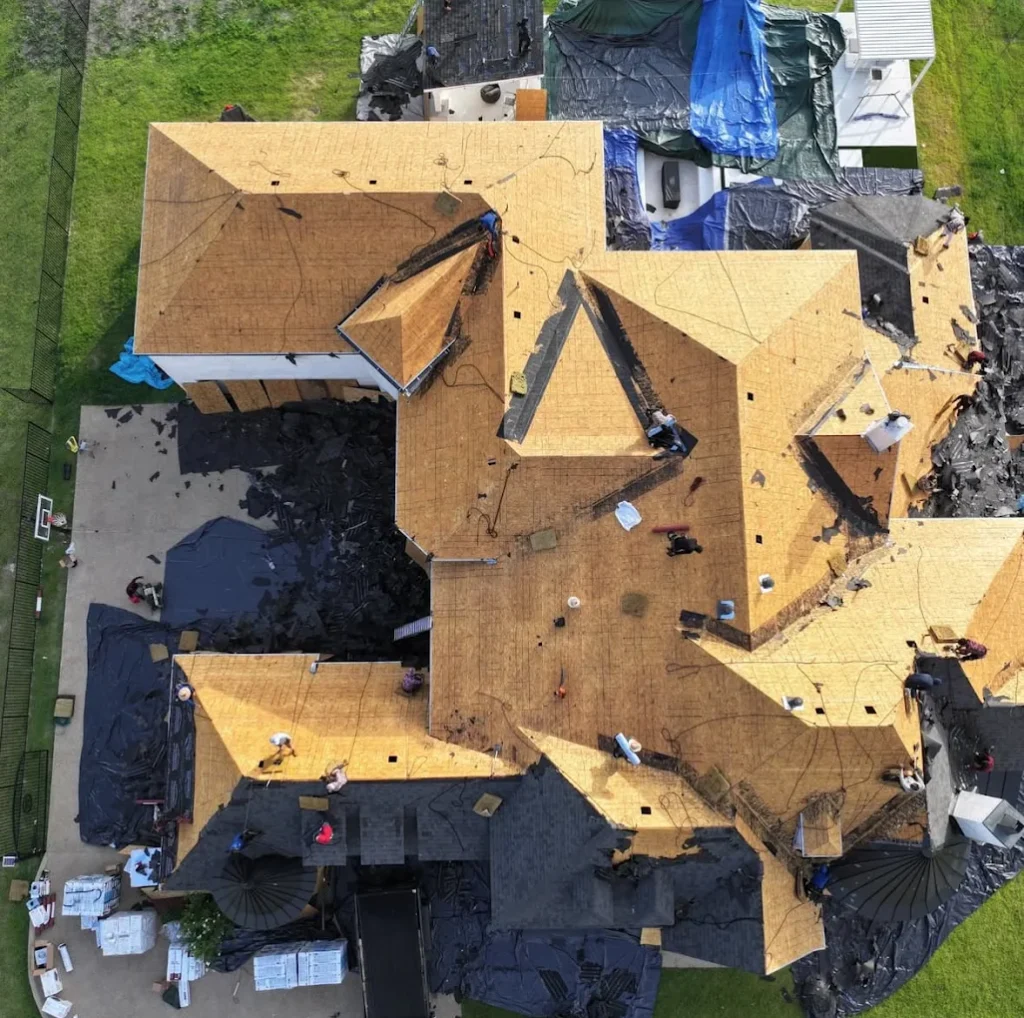
The situations described here are composites drawn from the types of jobs and decisions we encounter regularly. Names and specific figures are illustrative.
A Prosper homeowner had a house built in 2007 with its original architectural shingles, now 19 years old. In October, the insurance company photographed the roof ahead of renewal and changed the coverage on it from replacement cost to actual cash value. The west slope, which gets the afternoon sun, had the most wear. That change started the search for roof replacement in Prosper, TX, and within a week the homeowner had two quotes about $4,000 apart.
Both quotes used a similar architectural shingle and a similar warranty. The difference was one line. The lower quote said “install new shingles over existing.” Ours said “remove existing roofing to deck.” In the trade, the first is called a recover or a layover. The second is a tear-off. The homeowner’s question to us was simple: is the extra money buying anything I’ll actually get, or is it just how roofers like to work?
Two quotes, one line apart
The house is a two-story brick home a few streets off Preston Road, about 31 squares of roof once you count the porch and the garage. That’s a common size for Prosper homes from that building wave. Here is how the two bids looked side by side.
| Line item | Layover quote | Tear-off quote |
|---|---|---|
| Price (31 squares) | $12,900 | $16,950 |
| Old shingles | Stay on the roof | Removed and hauled off |
| Deck inspection | Not possible | Every sheet seen, bad sheets priced per sheet |
| Underlayment and drip edge | Not listed | New synthetic underlayment, new drip edge |
| Permit | Not mentioned | Pulled by the contractor |
The price gap is real. On a roof this size, tear-off labor, a dumpster and disposal fees add up fast. We weren’t going to pretend the layover quote was a scam just because it was cheaper. If you want a sense of how replacement prices break down across Collin County, our post on what a roof replacement costs in Allen walks through the line items, and most of it applies in Prosper too.
Why the cheaper quote wasn’t crazy
Recovering a roof is a legitimate method, and it’s worth saying so before getting into this particular house. The Asphalt Roofing Manufacturers Association says that in many cases it isn’t necessary to tear off old shingles first. If a roof has only one layer of shingles that lie flat and the deck is in good shape, the old layer can even act as a backup under the new one. Most codes cap a house at two roof coverings, and this house had one.
So on paper, the layover passed the first test. The rest depended on whether the old shingles and the wood under them could hold a second roof for another twenty years. Neither quote could answer that without someone checking the attic and the roof.
What the attic and roof inspection showed
We started in the attic, which is where a layover decision usually gets settled. Over the primary bathroom, two patches of the decking were darker than the boards around them, with water staining that ran down toward a valley. The bathroom exhaust fan wasn’t ducted to the roof at all. Its flex duct ended in the insulation, so every shower for nineteen years had been pushing warm, wet air straight at the underside of that section of deck. That’s common in homes from this era, and it’s the kind of thing a full roof inspection should catch before anyone writes a replacement scope.
On the roof, the west and south slopes showed the rest of the damage. After this summer’s heat, the shingle edges there were cupped and lifting, and the granules had thinned enough that the dark mat showed through in spots. Near the porch tie-in, the deck had a little give underfoot. The north slope was in noticeably better shape, which is typical. The sun-facing sides of a North Texas roof wear out first.
Three facts lined up against the layover. First, the shingles on the roof were laminated architectural shingles. ARMA notes that most manufacturers don’t recommend installing new shingles over existing laminated ones, because the thick, uneven profile doesn’t give the new layer a flat base. Second, the International Residential Code, which Collin County towns build their local codes from, doesn’t allow a recover where the existing roof is water-soaked or deteriorated enough that it isn’t an adequate base. Two stained areas and a soft spot near the porch put part of this roof in that category. Third, the Town of Prosper requires a permit for re-roofing, and its Building Inspections Division does on-site inspections after the permit is issued. A layover over a deck with known problems is the kind of job that can get flagged partway through.
“The code doesn’t allow a second layer over a roof that’s water-soaked or too deteriorated to be a good base. You can’t tell that from the driveway. You have to look at the deck.”
Don Scott, Co-Founder, Fireman’s Roofing
Weighing the cost
The homeowner’s next question was a fair one: what if we just replaced the bad sheets in those two spots and laid over the rest? We talked it through. Cutting out sections of an existing roof to patch the deck, then covering the whole thing with a second layer, gives you most of the labor of a tear-off without most of the benefits. You still can’t see the other 29 squares of deck. And the next time the roof gets replaced, the crew has to strip two layers instead of one, which costs more.
The insurance change also mattered. The Texas Department of Insurance notes that carriers inspect roofs when you apply for coverage and may charge more or refuse coverage based on what they see. It also notes that as roofs age, some companies switch them to actual cash value, which is exactly what had happened here. A second layer over old, cupped shingles would not help at the next renewal inspection. A clean new roof gave the homeowner a reason to ask the agent about going back to replacement cost coverage. The agent said a new roof would be re-rated at renewal. The homeowner also asked about the credit for impact-resistant shingles, which TDI says some companies offer.
We also told the homeowner where not to spend more. The homeowner asked whether to replace the gutters and add a powered attic fan while the crew was there. The gutters were seamless, pitched right and only a few years old, so we left them alone. A powered fan in an attic that already had ridge and soffit vents would have worked against the ventilation the roof needed. The money went into the deck, the bath fan duct, new drip edge and an impact-rated shingle. Nothing else was added to the job.
What came off the roof on day one
The tear-off was done in late October. Fall is a good time for roof replacement work in this part of Texas. Crews aren’t stacked three deep with spring hail jobs, and afternoons are warm enough for new shingles to seal down. The back slopes were stripped to bare wood first.
The deck over the bathroom was worse than the attic suggested. The stains seen from the attic were only the edges of the damage. Here’s what turned up once the old roof was off, and whether a layover would have dealt with any of it.
| What we found | Fix and cost | Covered by a layover? |
|---|---|---|
| Six OSB sheets delaminated over the bathroom and valley | Replaced at $85 per sheet, $510 | No, hidden under two layers |
| Two soft sheets at the porch tie-in | Replaced, $170 | No |
| Bath fan venting into the attic | Ducted to a new roof jack, $240 | Possible, but rarely included |
| No drip edge on the rake edges | Included in the tear-off scope | Not listed in the quote |
The extras came to $920, which we had priced per sheet in the quote so there was no surprise call on day two. The Texas Department of Insurance’s own guidance for homeowners says the deck should be inspected and any deteriorated or damaged decking replaced before a new roof covering goes on. A layover makes that impossible by design. The roof was dried in that afternoon, shingled the next day, and passed the town’s inspection the following week.
What homeowners usually ask us about layovers
Most people at this point ask whether two layers means twice the protection. Not really. The old layer can act as a backup only if it lies flat over a sound deck. When it’s cupped and brittle, the new shingles take on its shape, and nail holes from two roofs end up in the same wood.
The next question is usually about the warranty. Shingle warranties depend on the shingles being installed to the manufacturer’s instructions, and many manufacturers don’t support going over laminated shingles. If a layover quote comes with a manufacturer warranty, it’s worth asking to see the installation requirements that warranty depends on.
People also ask whether a layover avoids the permit in Prosper. It doesn’t. Re-roofing needs a permit from the town either way, and the contractor doing the work is the one who pulls it. A quote that doesn’t mention a permit is worth a follow-up question. Last, people ask how long a tear-off takes. On a 30-square home in decent weather, tear-off and dry-in usually take one day, and shingles go on over one or two more. A layover saves about a day.
When a layover still makes sense
There are houses where we’d tell a homeowner the cheaper quote is reasonable. A single layer of flat three-tab shingles, a dry attic with no stains, a solid deck underfoot, a town that allows it and an owner who plans to sell in a few years. In that case, the savings are real and the risk is small. On this Prosper roof, the deciding factors weren’t a sales preference. They were laminated shingles, a damaged deck and an insurance company already watching the roof.
For a longer walk through a full job from the first bid to the final inspection, our roof replacement guide covering timing, budget and material choices follows one North Dallas house start to finish.
What the homeowner ended up with
The final bill came to $17,870, almost $5,000 more than the layover quote. For that, the homeowner got a roof with one layer on a deck we had seen sheet by sheet, a bath fan that no longer soaks the attic, and paperwork the insurance agent could use at renewal. From the street, both roofs would have looked the same this fall. The difference is that a layover would have left the soft wood over the bathroom in place, and soft decking doesn’t hold nails well when spring storms hit.
If you’re holding two quotes that differ mostly by the words “over existing,” check the attic before you decide. Looking at the deck from below, and knowing what kind of shingle is on the roof now, answers most layover questions. That’s how we approach roof replacement in Prosper, TX, and it’s the same standard we’d use on our own homes.
If you’re weighing a replacement in town, our Prosper roofing services page is a place to start.
Sources
- Reroofing: Replacement vs. Recover, Asphalt Roofing Manufacturers Association
- 2021 International Residential Code, Chapter 9: Roof Assemblies (Section R908 Reroofing), International Code Council
- Homeowner Permit Requirements, Town of Prosper
- Building Inspections Division, Town of Prosper
- Insurance and Your Roof: What to Know When Buying a Policy or Filing a Claim, Texas Department of Insurance
- Repairing My Roof After a Storm, Texas Department of Insurance
